
Using a hoseAutomatic fuel replenishment device

overview

In the event of a disaster at a nuclear power plant or a landslide, maintaining the continuous operation of equipment such as generators, fire engines, water pumps, and construction machinery, even in areas where people cannot approach due to the risk of secondary disasters, is extremely important for firefighting, rescue, and recovery efforts.
An automatic fuel supply system using a hose is a system for automatically supplying fuel to multiple supply locations from a remote location.

This system is patented in collaboration with Nippon Dry Chemical Co., Ltd.

How an automatic fuel refueling system works
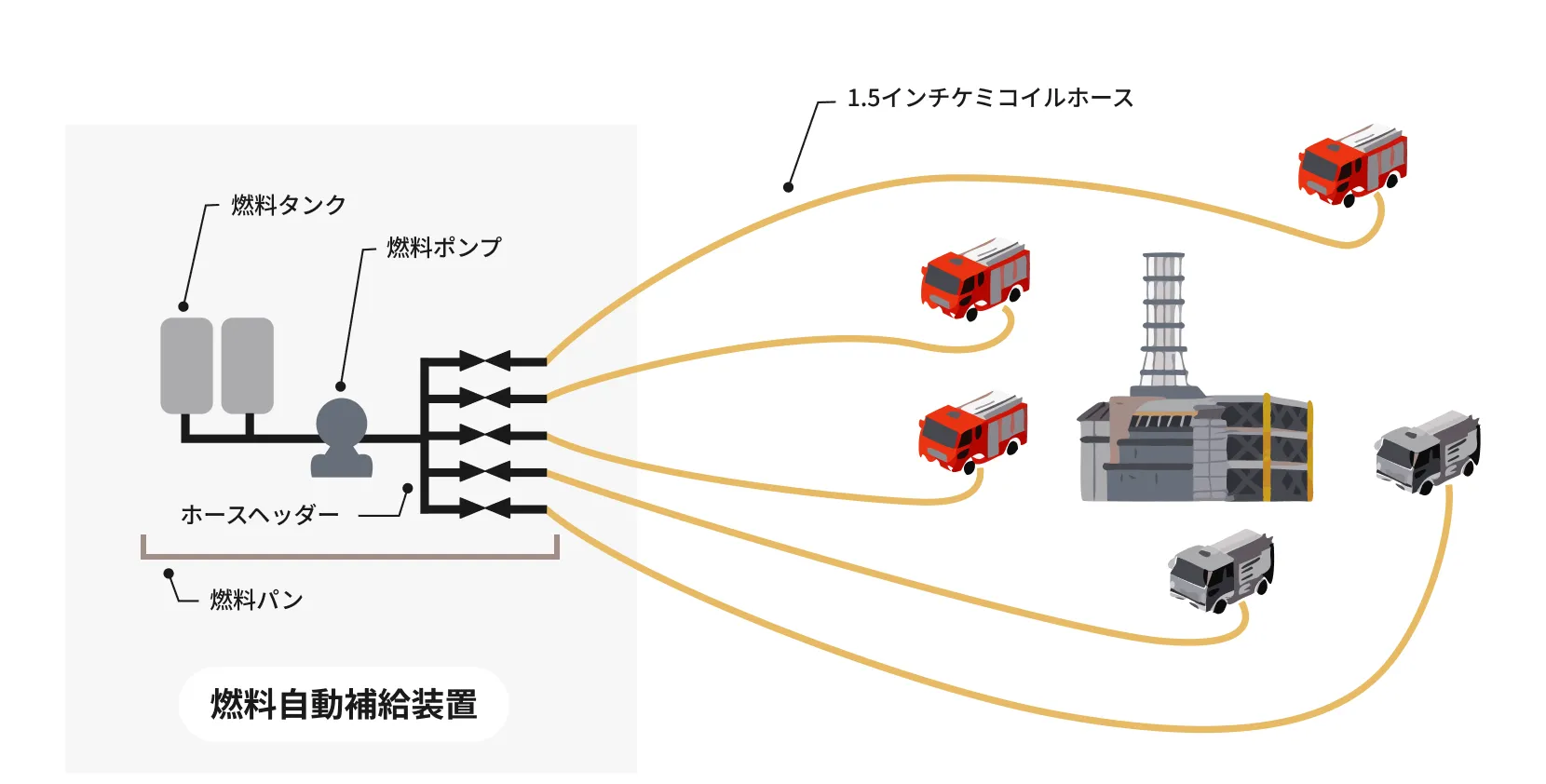
燃料自動補給装置の仕組みを示す図

System Configuration

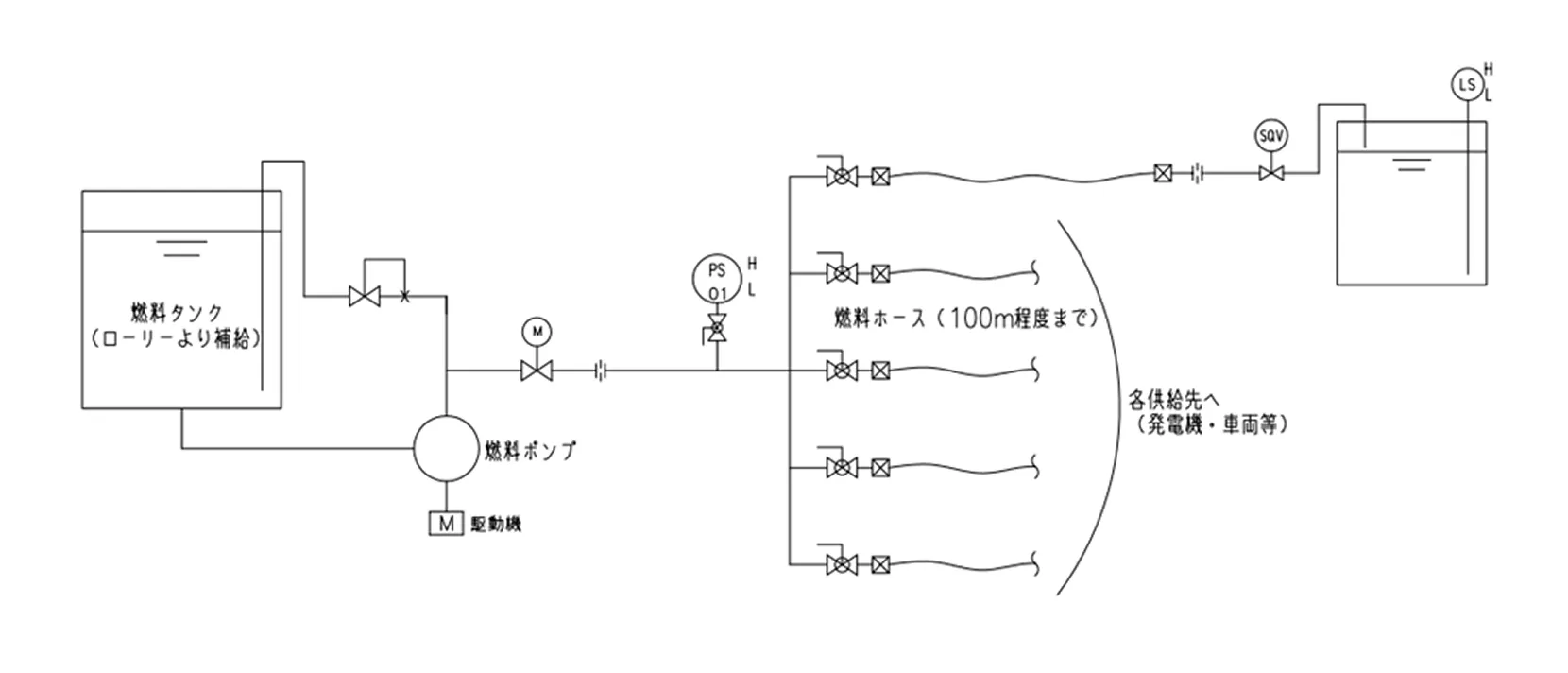
The automatic fuel refueling system consists of a fuel tank, fuel pump, and hose header.

System Concept Diagram
燃料自動補給装置のシステム概念図

Features

  1. System configuration and mobility

    This system consists of a fuel tank, fuel pump, and hose header. The entire system is designed with a skid (frame) structure, allowing for easy loading onto trucks and other vehicles. A portable generator is used for power, enabling operation in various locations.

  2. Fuel transfer performance

    While there are no theoretical limits on the fuel transfer distance, excluding pressure loss, we recommend operating over distances of approximately 50m to 150m from a practical standpoint, considering on-site handling and operational efficiency.

  3. Hose used

    The fuel transfer hose uses a 1.5-inch Chemicil hose, which offers excellent chemical resistance and durability.

  4. Independent control without the need for external signals

    There is absolutely no need to exchange electrical signals with the supply destination (fire trucks, etc.). This eliminates the cost and effort of laying long signal cables, enabling rapid setup.

  5. Modification of the supplier (engine side)

    Prior to implementation, minor modifications, such as the addition of a solenoid valve, are required to the fuel system on the engine side that will receive the fuel supply.

  6. Number of fuel dispensers

    As the number of vehicles requiring refueling increases, the probability of simultaneous refueling rises, leading to an over-reliance on pump capacity. Therefore, we recommend limiting the number of fuel supply destinations to a maximum of five.