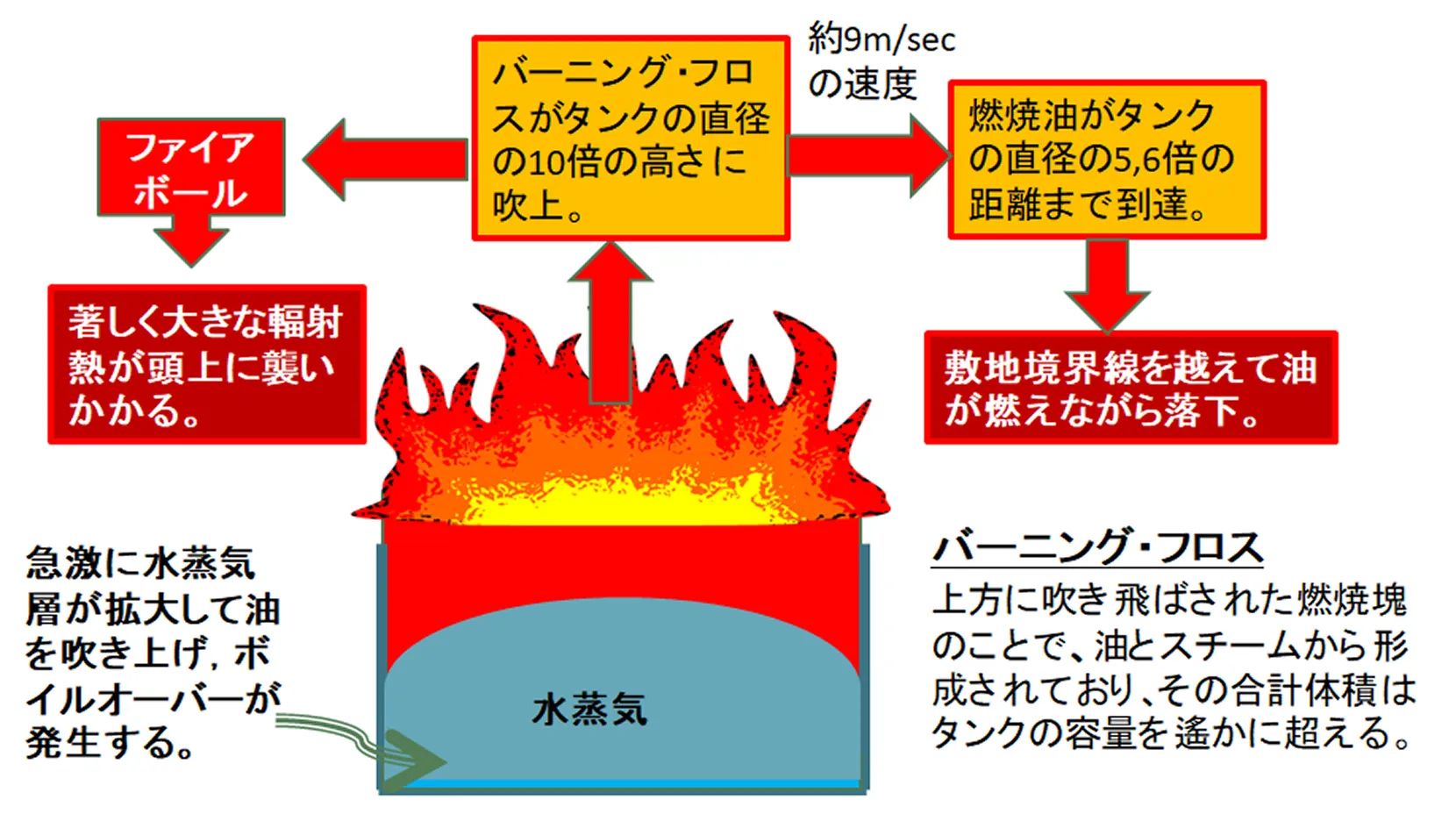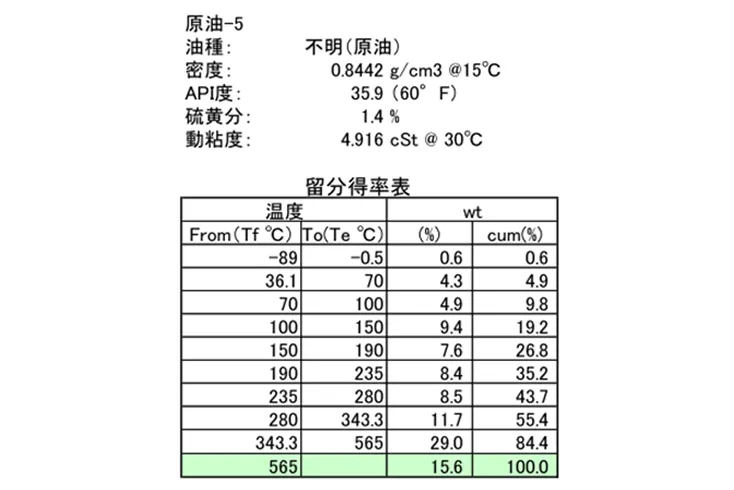

Various experimental results have shown that boilover can occur if the following conditions are met:
Conditions under which boilover occurs
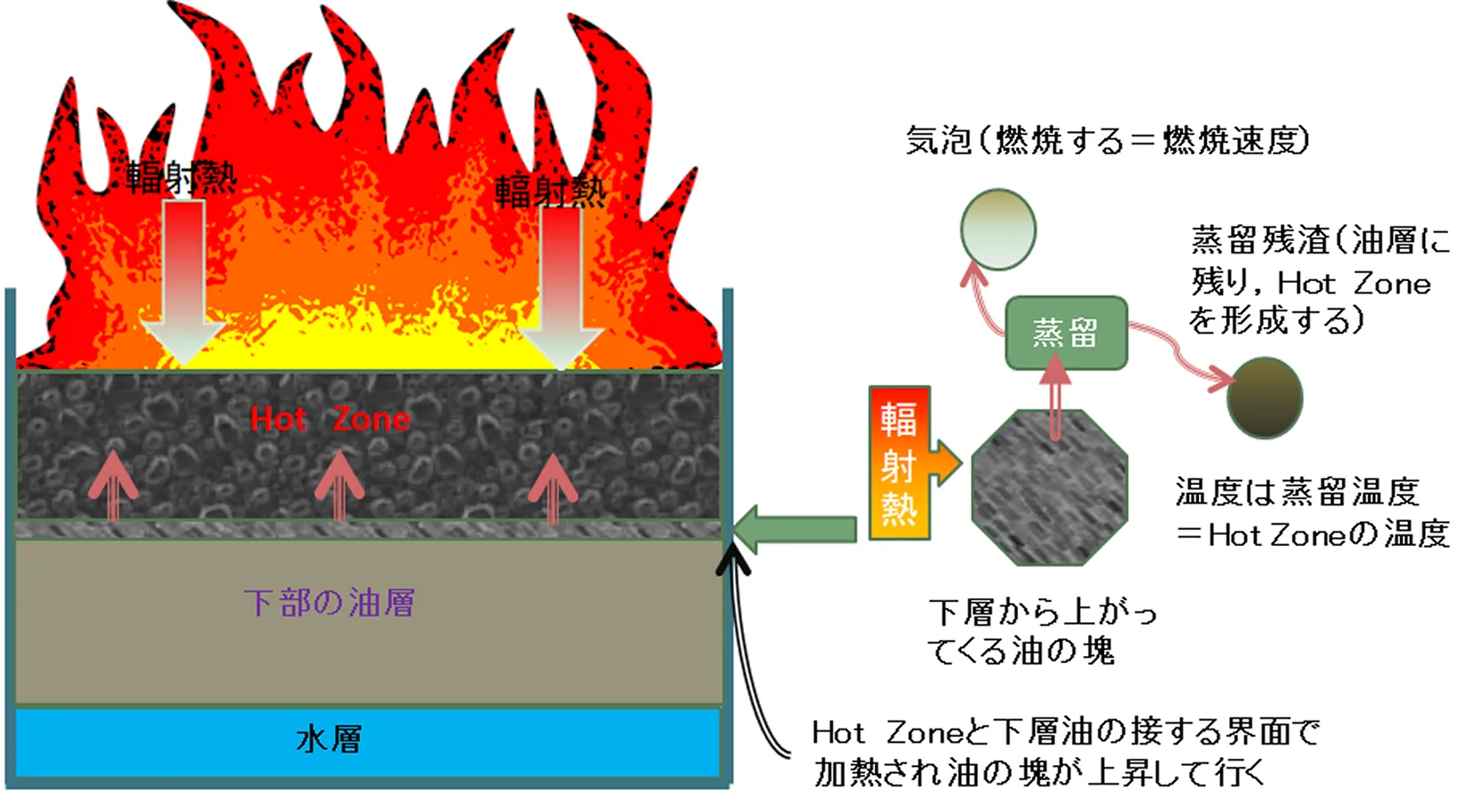
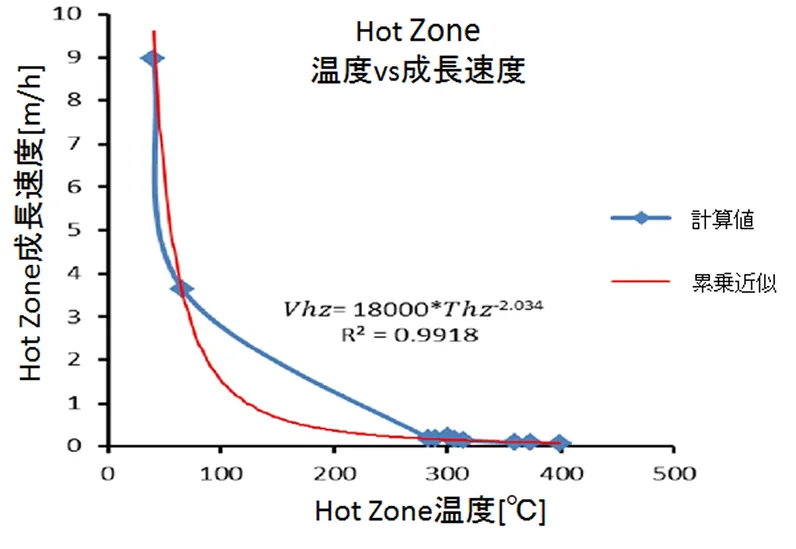
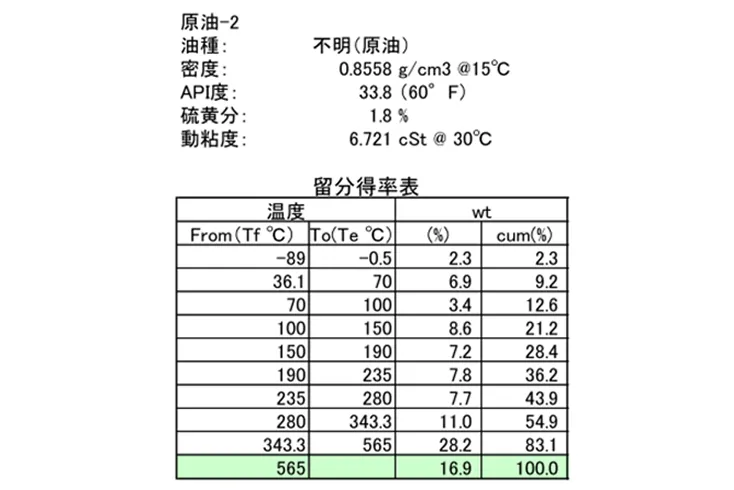
- A zone of constant temperature (hot zone or heat wave) occurs during a fire and expands downwards (this is due to the use of a multi-component fuel oil with a wide boiling point range).
- Fuel oil has high viscosity. (It easily forms bubbles.)
- The temperature in the hot zone must be 120°C or higher.
(When hot oil comes into contact with the water layer at the bottom of a tank, if the temperature is 100°C, the water will boil, but the amount of steam generated is not large enough to lift the oil, and only the steam escapes as bubbles. However, at temperatures above 120°C, so-called nucleate boiling occurs, rapidly generating steam that spreads horizontally within the tank, lifting the entire oil and causing a boilover.)
Furthermore, boilovers are not limited to crude oil; they can occur with other flammable liquids (such as pure substances, gasoline, and heavy oil) if the above conditions are met. In fact, boilover accidents involving diesel fuel and heavy oil have occurred.
On the other hand, oils with a narrow boiling point range, such as diesel fuel and heavy oil, have a narrow high-temperature area below the combustion surface, and the temperature change follows an exponential curve. The downward movement speed of this high-temperature layer is also slow, which is the so-called combustion speed, so even if a boilover occurs, the amount of oil that is ejected is already small, making it less dangerous.