
Foam discharge
Compatible nozzles
The radial trajectory differs depending on the type of foam nozzle. Our program uses two or more radial trajectory data points from the nozzle manufacturer to determine its own unique characteristic factors, allowing it to reproduce a flight path that is appropriate for that particular nozzle.
Expansion ratio
In the case of an aspirator nozzle, the expansion ratio remains constant during flight, but in the case of a non-aspirator nozzle, the expansion ratio changes depending on the flight time, so the expansion ratio at the time of landing must be calculated.
Water discharge pattern
It only supports rod-shaped radiation.
Wind effects
It can simulate radial trajectories that reflect the effects of wind blowing at any angle, not just tailwinds or headwinds.
Radial direction
You can simulate radiation at any angle.
display
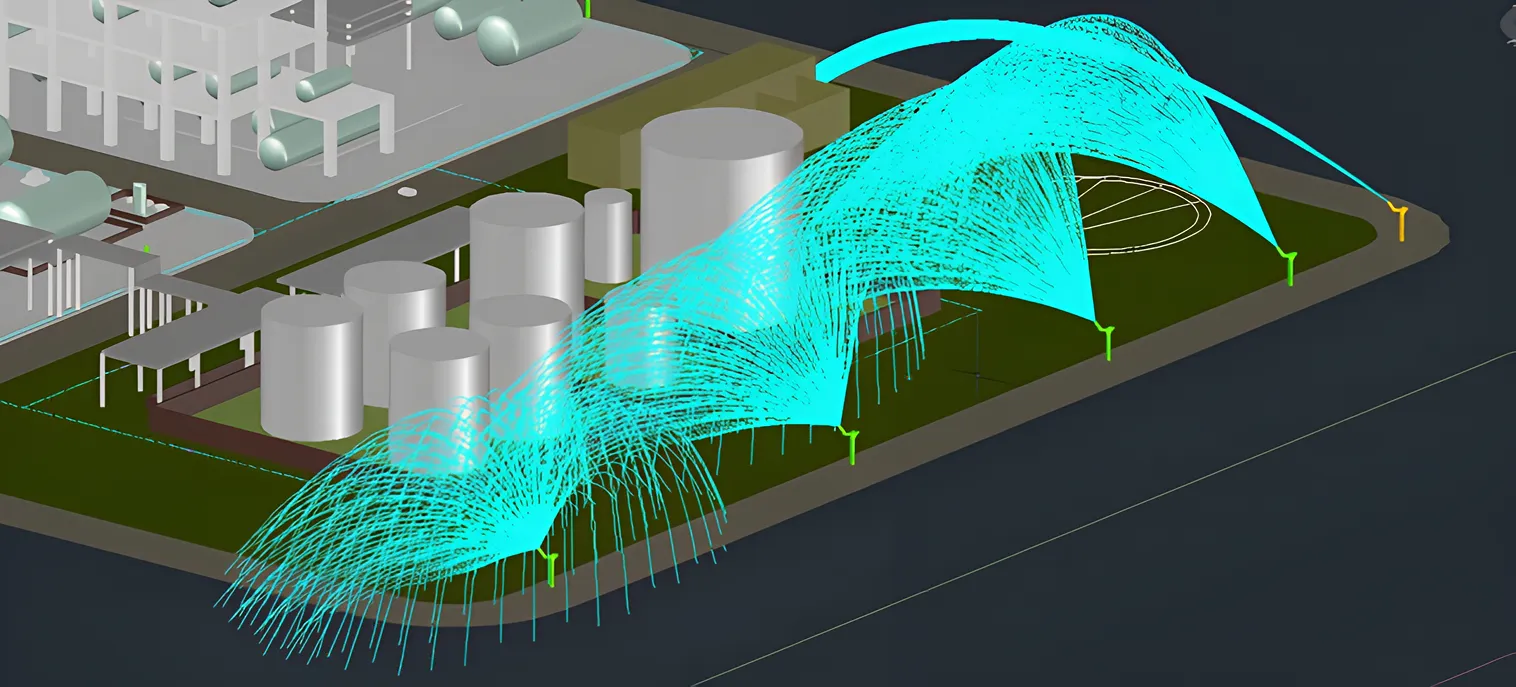
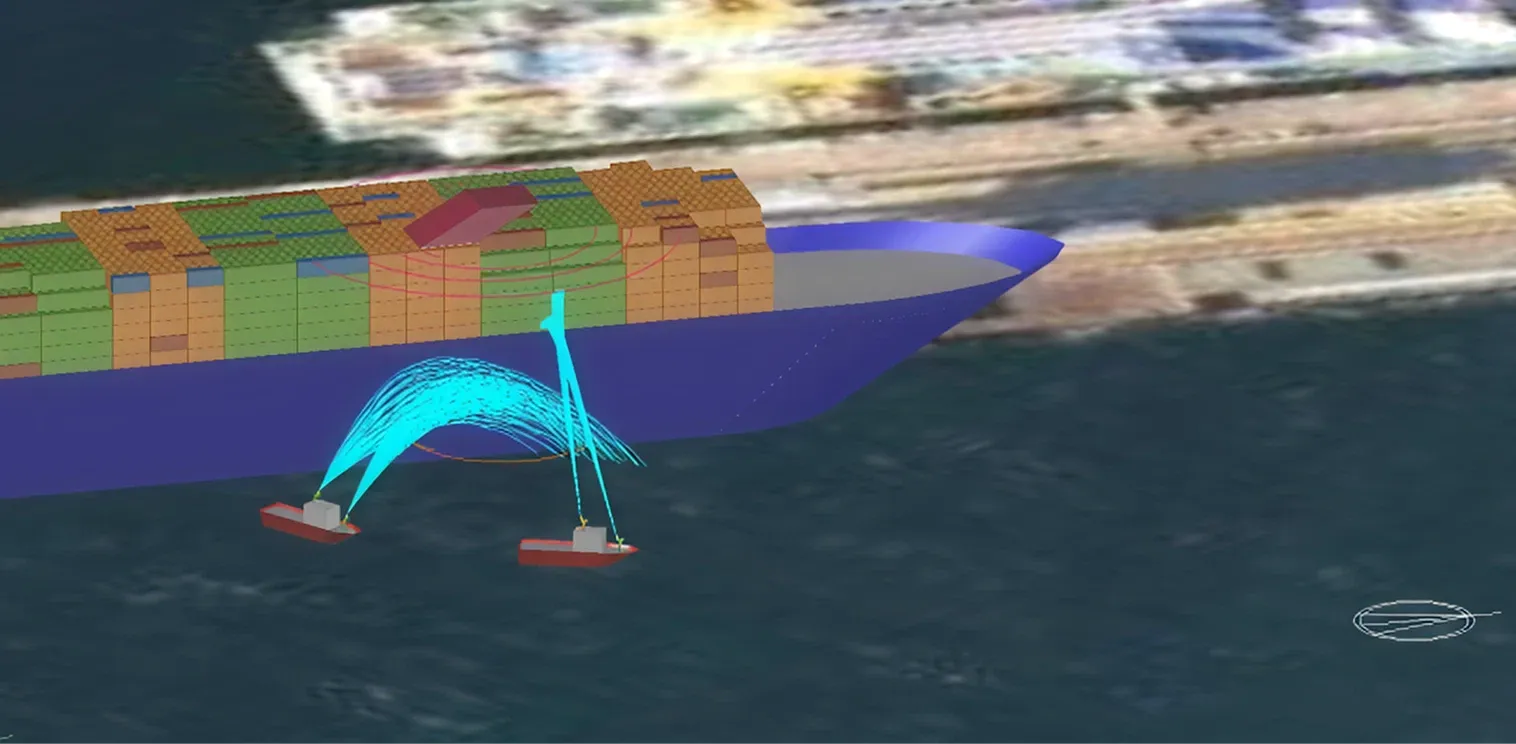
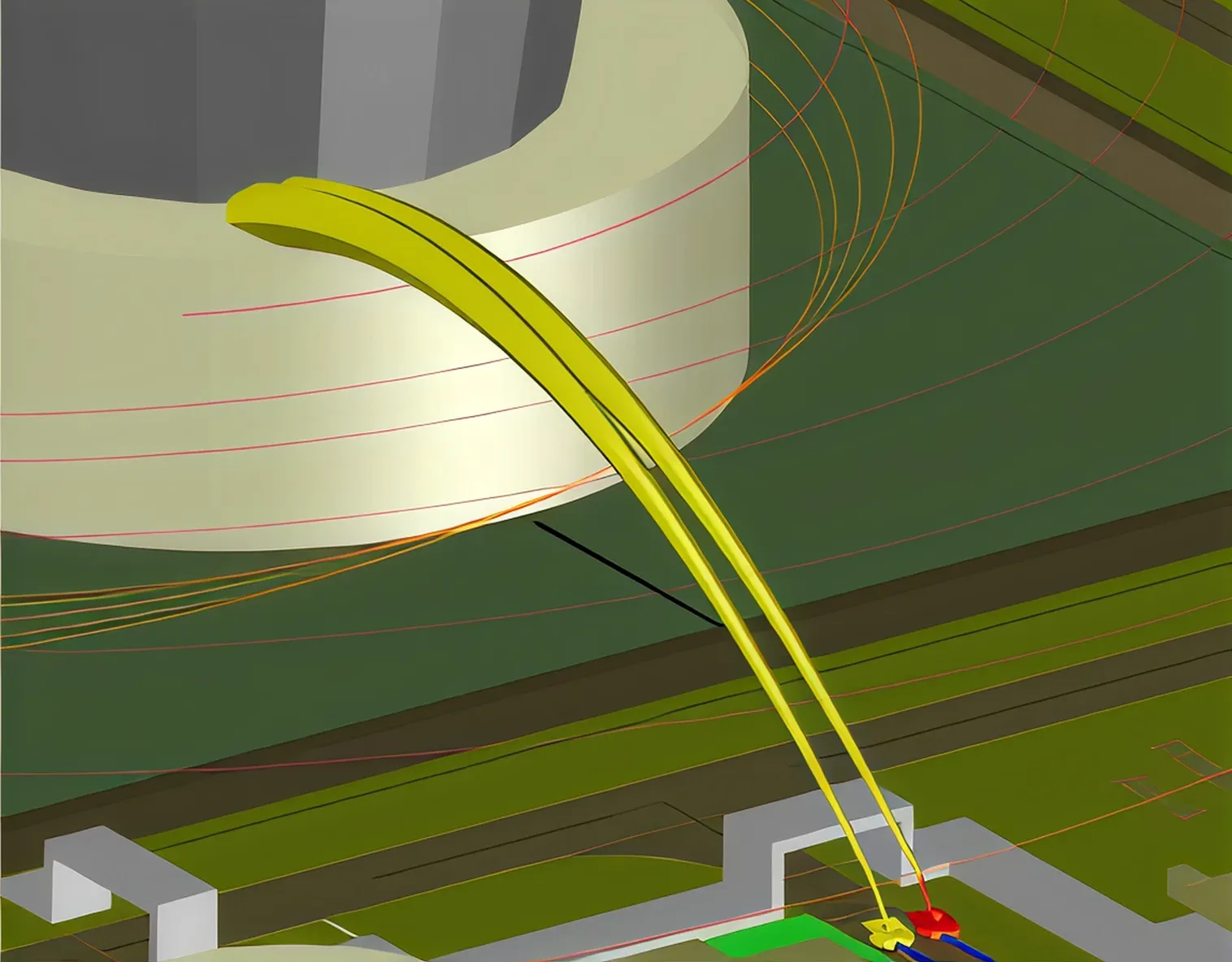
This tool displays radial trajectories on top of AutoCAD drawings such as plant layouts and maps. While typically displayed in three dimensions, two-dimensional display is also possible.
Examples of foam emission simulation
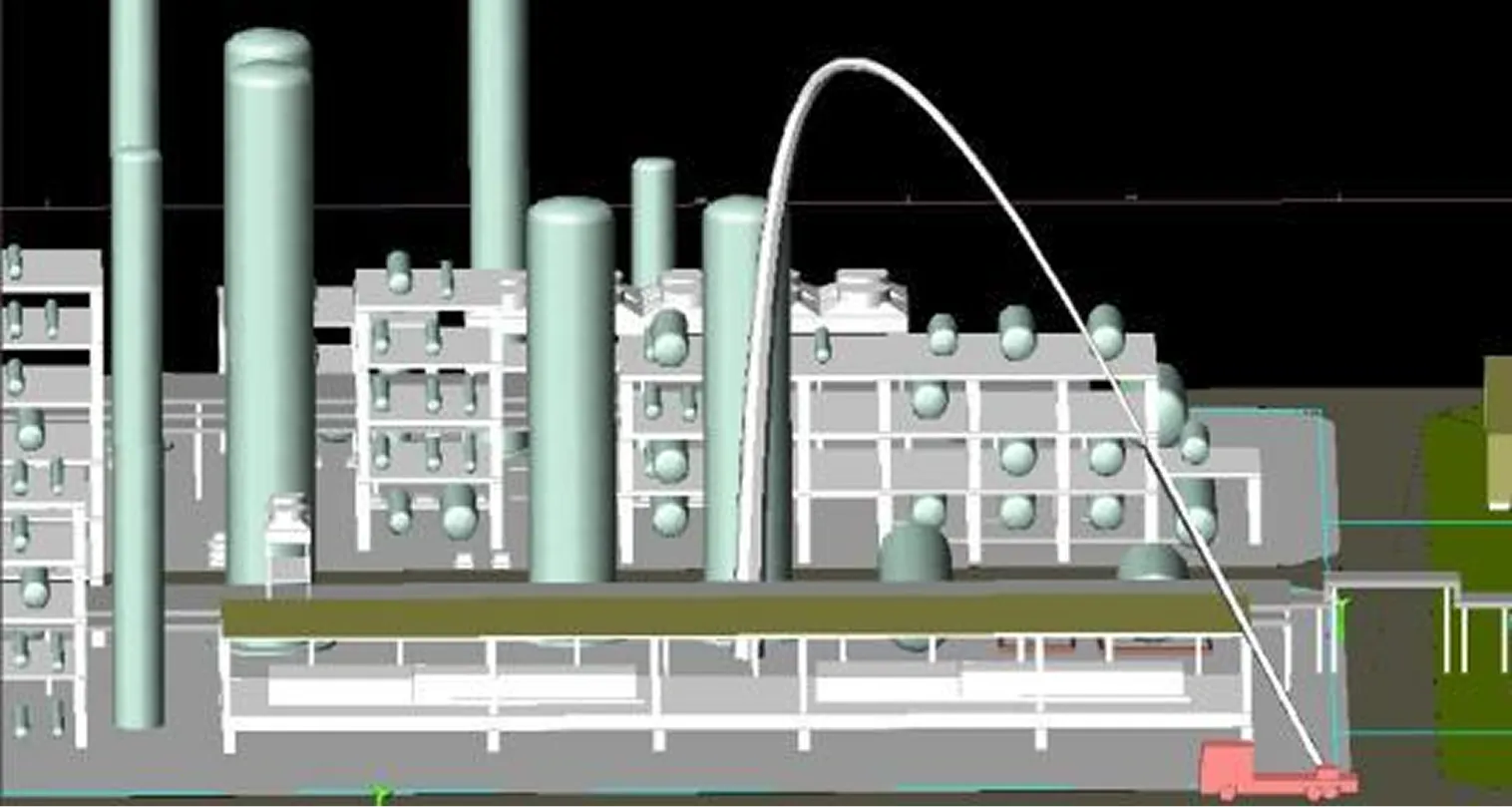
Example 1: Foam discharge from a fire truck during a process area fire
The diagram below shows an example of foam being sprayed from a fire truck over a compressor shelter during a process area fire.
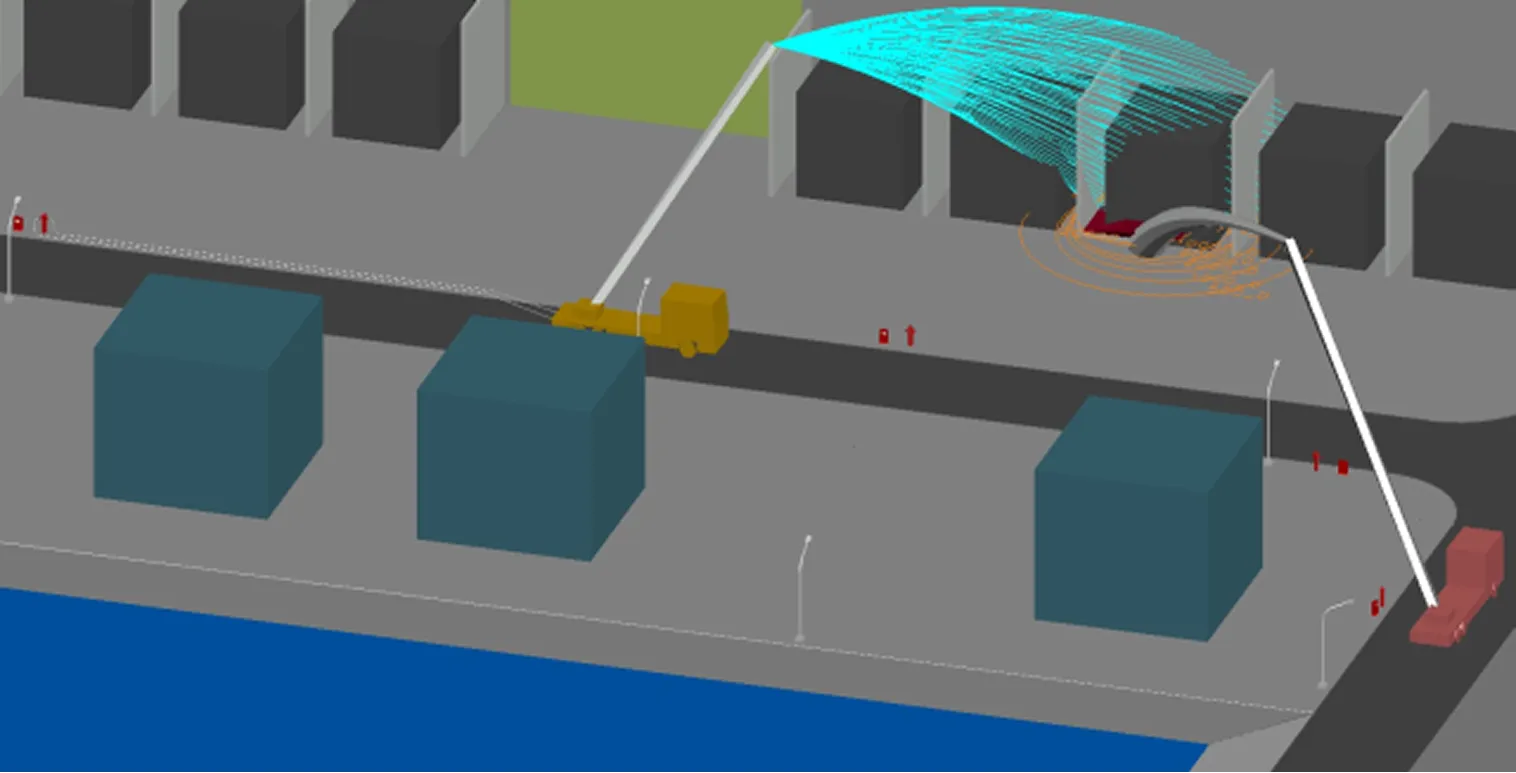
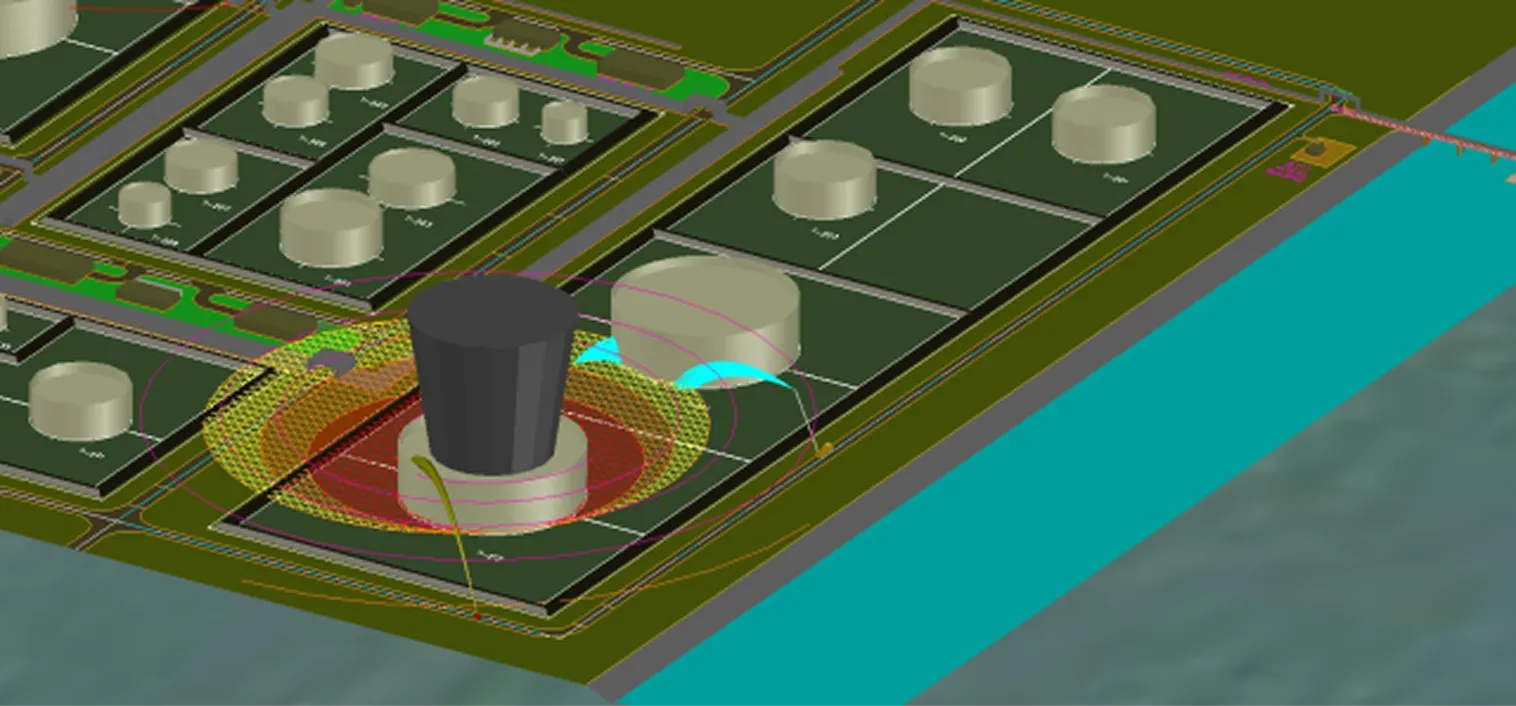
Example 2: Foam spraying from a fire truck to a tank fire
The black cylinder on the tank in the diagram below represents the area with the largest updraft caused by the fire. The foam discharge must be directed to avoid this area and enter the tank. If done correctly, the foam discharge will be golden in color.
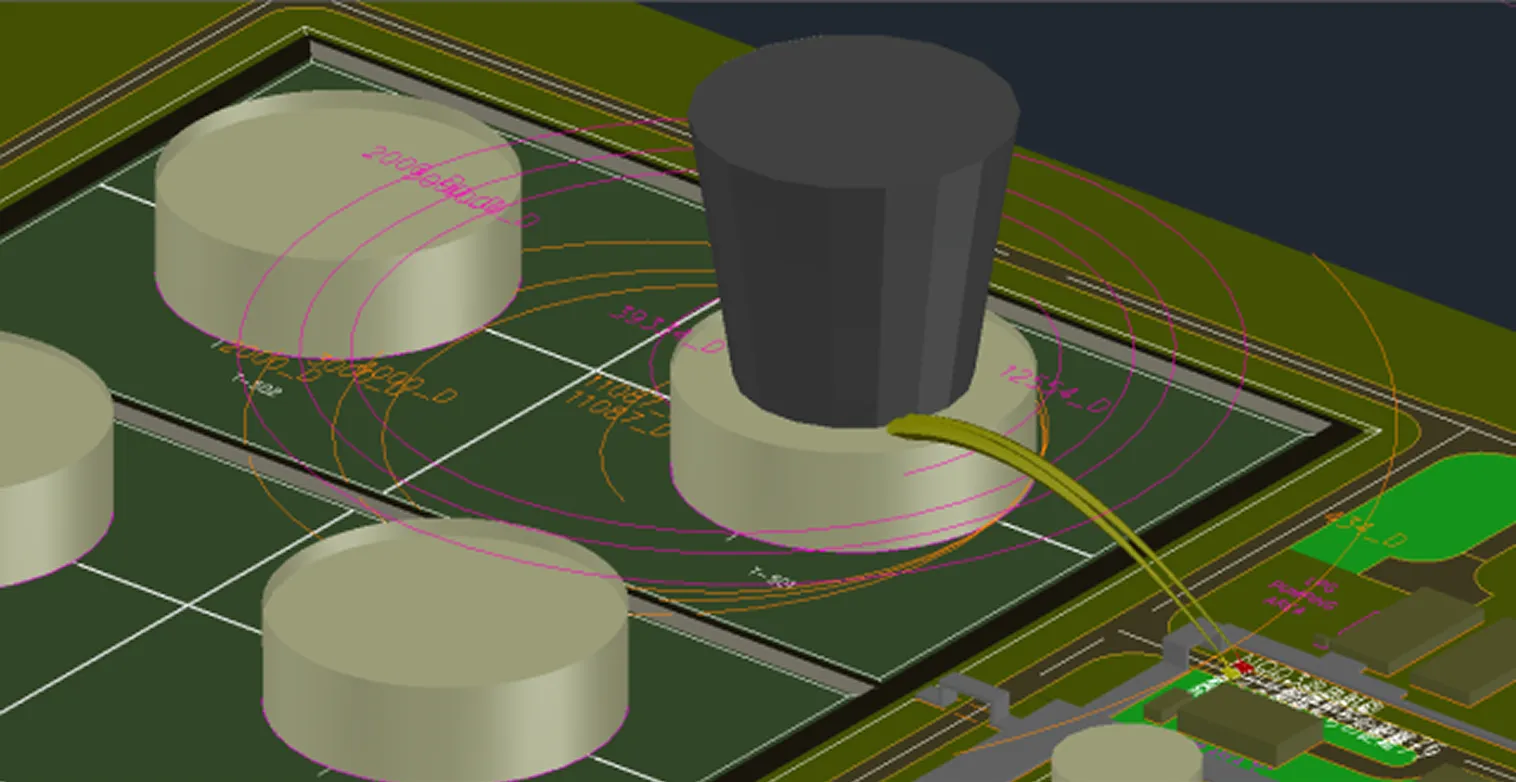
Example 3: Foam spraying to tank fires using a large-capacity foam spraying monitor
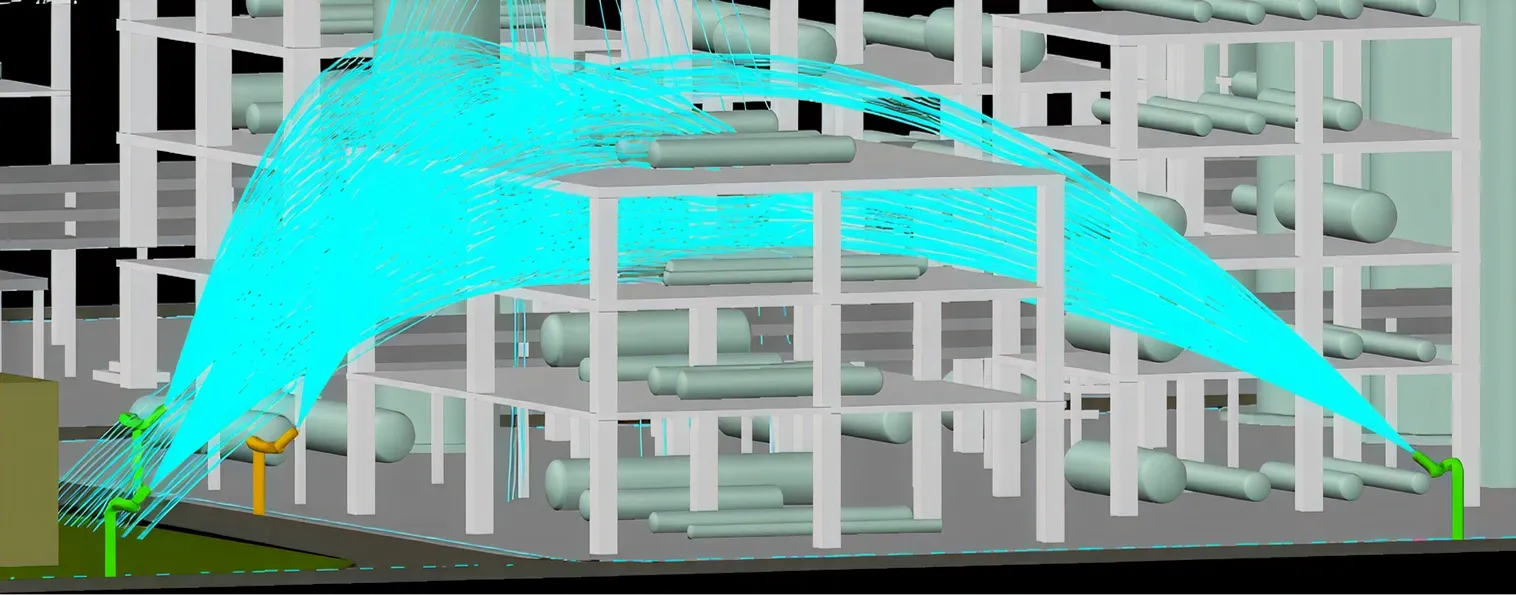
The diagram below shows an example of foam being sprayed from a large-capacity foam cannon towards a tank over a pipe rack. The black cylinder on top of the tank represents the area with the largest updraft due to the fire.
The image below is a close-up of the pipe rack. It is necessary to display a 3D layout of structures that could potentially cause radiation interference in the preliminary drawing.