Tank fire extinguishing

About Tank Fire Extinguishing Simulation

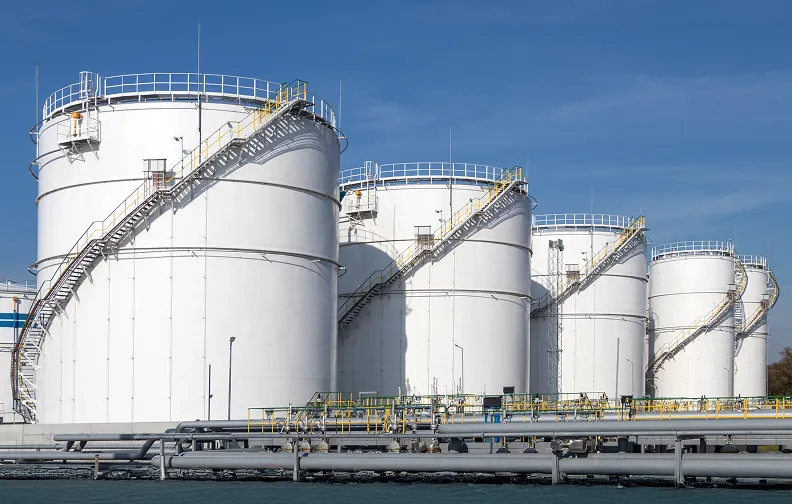
This program was developed to highly simulate firefighting tactics for a "full-surface fire on a floating-roof tank" using a large-capacity foam cannon.

Main functions and features

  1. Logical prediction of fire extinguishing time

    The time required for the foam bridgehead to be established above the burning liquid surface and the foam's development speed are calculated. Based on these, the theoretical fire extinguishing time is derived.

  2. Simulations that reflect actual on-site conditions

    Identify the optimal placement points for foam cannons in windy conditions. This enables the development of highly effective firefighting tactics that take weather conditions into consideration.

  3. Safety considerations

    We perform radiant heat calculations caused by fire to visualize the safe operational limits for firefighters and the possible deployment range for fire engines and equipment.

  4. High versatility

    In addition to floating-roof tanks, this system also supports firefighting simulations using fire trucks and foam monitors for fires in fixed-roof tanks.

Multifaceted computational approaches

This program combines the following calculation functions comprehensively. In particular, the calculations regarding bubble development speed and bubble loss are based on an experimental report called FOAM SPEXS conducted by a research institution in Sweden.

  • "Calculation of the flight path of bubbles emitted from a bubble discharge nozzle" and "Calculation of the loss of bubbles in flight"
  • "Radiation intensity calculation" for safety checks for firefighters and foam cannon installation.
  • "Calculation of foam loss by calculating the rising airflow velocity" generated above the liquid surface in a tank fire.
  • Estimating the time it takes to establish the first bridgehead if the bubbles that reach the combustion liquid surface do not disappear.
  • "Calculation of fire extinguishing time" based on foam deployment.
Use the 3D viewer to make simulation results more "realistic".

By using the dedicated "FM Viewer," you can freely manipulate the simulation results on your PC. You can pinpoint and zoom in on the area you want to see, dramatically improving your understanding of the analysis accuracy compared to conventional still images.

Services offered: Tank fire extinguishing / Radiant heat calculation / Water and foam discharge

Further details are explained on the FM Viewer introduction page.

FM Viewer

Bubble radiation and updrafts

Effective placement of foam

The foam released from the foam nozzle is strongly affected by wind, resulting in losses due to scattering during flight. On the other hand, a strong updraft is generated at the tank fire surface due to combustion, and the updraft becomes stronger as you move from the edge of the tank towards the center. Also, the updraft velocity is not large at heights just above the combustion surface, but the updraft velocity increases as you go higher above the combustion liquid surface. Therefore, the most effective placement of foam is either at the edge near the circumference of the tank or at heights just above the combustion liquid surface.

Sweet spot method and footprint method

The method of extinguishing a fire by pouring the extinguishing agent around the circumference of the tank is called the sweet spot method, while the method of pouring the agent just above the burning surface of the tank is called the footprint method. Our company advocates the sweet spot method, but we also support the footprint method.
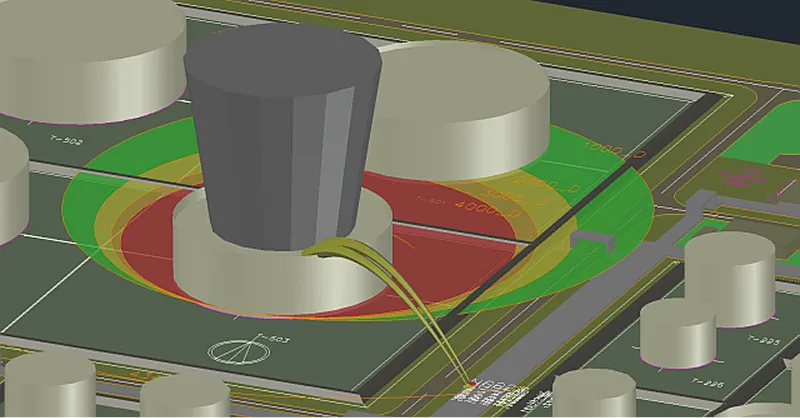
The diagram on the right shows an example of foam being injected into the sweet spot from a large-capacity foam cannon. The black cylindrical area represents the region with high updraft velocity; if the emitted foam comes into contact with this area, the program will determine that it is unsuitable. When the foam successfully enters the sweet spot, the foam emission changes to a golden color.

スウィートスポットへの泡投入シミュレーション結果

Foam deployment and firefighting

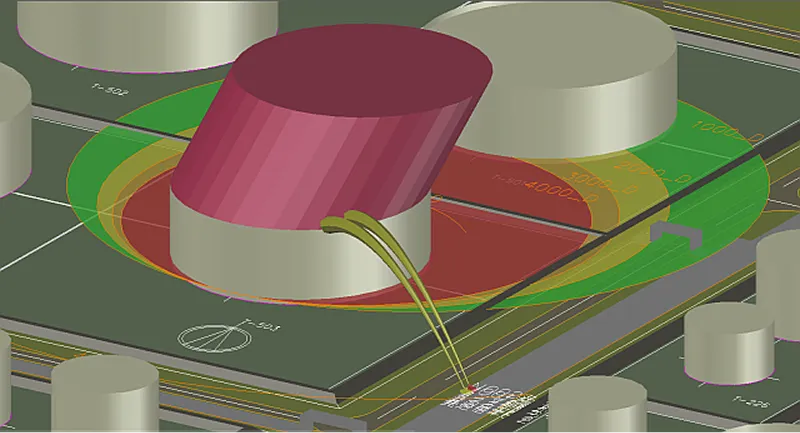
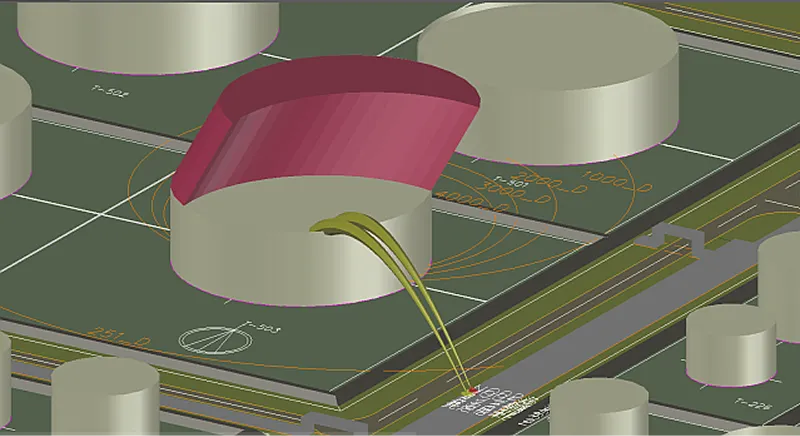
When foam is introduced into the sweet spot, it reaches the surface of the burning liquid, but because the temperature of the burning liquid is high, the foam evaporates and disappears. However, if foam is continued to be introduced, the liquid surface in that area cools down and foam begins to accumulate. This initial accumulation of foam is called the "foam bridgehead." From this bridgehead, the foam then expands across the burning liquid surface, eventually leading to fire extinguishing. Of the total fire extinguishing time, the time spent establishing the foam bridgehead is the longest, and the foam's expansion, depending on the foam introduction speed, is relatively short.

The diagram on the left shows the process of creating a foam bridgehead. The intensity of the fire will not change until the foam bridgehead is established.
The diagram on the right shows a situation where foam has begun to spread across the surface of the burning liquid, partially extinguishing the fire. Radiant heat is also decreasing accordingly.

泡の橋頭保を作っている状態のシミュレーション結果 泡が燃焼液面上を展開し消火している状態のシミュレーション結果

catalog

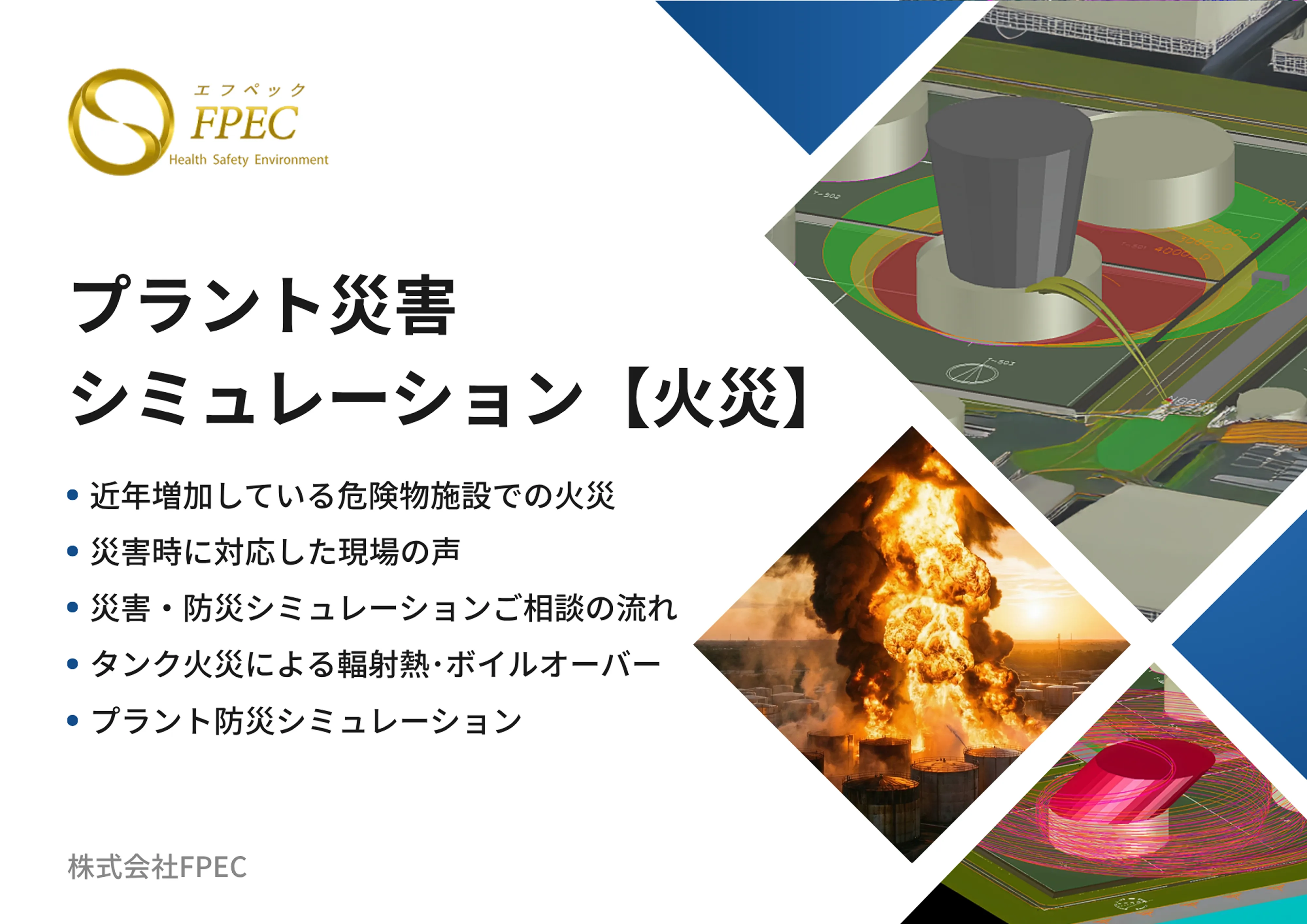
You can download the fire simulation catalog from here.

火災シミュレーションカタログ表紙